
Communication and Productivity Solutions for Data Centers
Data Centers are growing exponentially across the world and Florida is no exception. Driven by AI and cloud demand Florida has emerged as the 4th largest hub in the United States, driven by favorable tax incentives and its strategic location to support markets in Latin America.
Data Centers are typically large facilities for employees to navigate with large servers, network switches, routers, and air conditioning equipment that produce high ambient noise challenges for employees to effectively communicate. A typical data center is around 100,000 square feet, hosting thousands of servers, while hyperscale centers that serve high profile search engine or fulfillment companies can exceed a million square feet and can house tens of thousands of servers.
Industries
In response to this demand CSE Crosscom, has recently been recognized by one of Wall Street’s “Magnificent Seven” as their premiere wireless communications provider for their comprehensive two-way radio communications and Distributed Antenna System (DAS) deployment and maintenance for their data centers across the world.
Typical deployments for these facilities include the design, installation, and maintenace of Motorola Solutions two-way radio systems, Distributed Antenna Systems (DAS), and integrated GPS and location-based software solutions. Each facility’s requirements are unique, requiring customized solutions to support the communications and productivity within these facilities that frequently exceed twenty football fields, and can incorporate multiple locations.
Safety & Security Solutions
for Data Centers
- Two-Way Radio Communications (Systems/Portables)
- Distributed Antenna Systems (Enhance UHF Signals)
- Noise Canceling Communication Headsets
Through CSE Crosscom’s US companies including, Florida based Radio One, RFC Wireless in San Francisco; and Chicago Communications data centers across the country are turning to CSE Crosscom’s communications and productivity expertise. By leveraging all three location’s technical expertise and talented field service personnel across the US, Crosscom has emerged as a reliable resource for the latest voice, video and data solutions that provide connectivity, safety, and security for Data Centers.
If you’re looking for reliable data center communication, productivity and safety solutions, Radio One/CSE Crosscom has the latest voice, video, and data technology.
Contact Us today and find the best solutions for your data center.
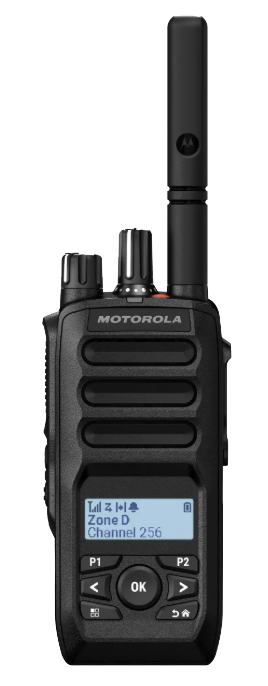
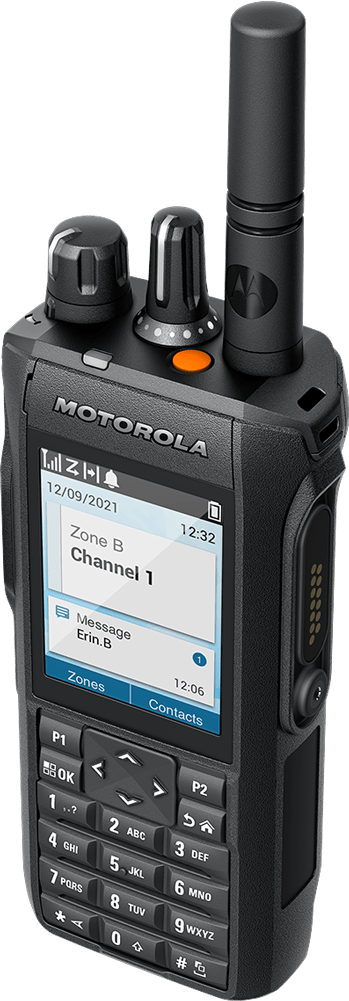
Two-Way Radios
Radio One / CSE Crosscom offers a comprehensive portfolio of MOTOTRBO™ commercial two-way radios, including rugged portables, dispatch consoles, and versatile system infrastructure to fit the needs of your school or district.
From lightweight and easy-to-operate wearable panic button solutions for teachers to the feature-rich ION radio that allows administrative staff to always be on with both voice and broadband data capabilities, we offer the right device for the right personnel including security, athletics, school buses and more.
Distributed Antenna Systems
As a Motorola Solutions Platinum Partner, for over 30 years Radio One has proudly supported local agencies and enterprise accounts across Florida and beyond with their two-way radio requirements.
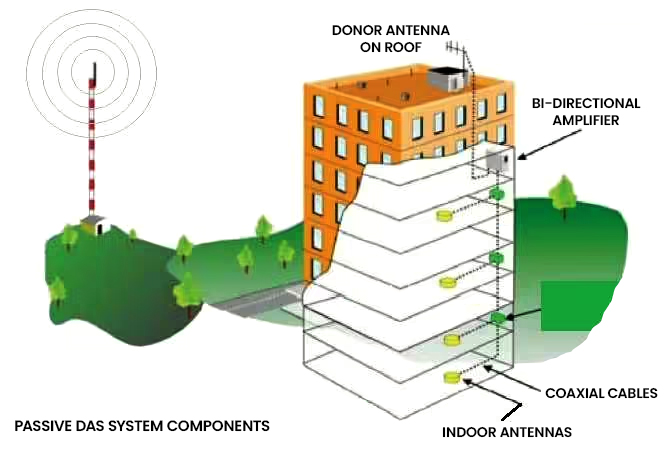
In short it is safe to say, we know RF (Radio Frequencies) and specialize in the design, deployment, and maintenance of Distributed Antenna Systems for both emergency responder and enterprise radio coverage in complex facilities, such as Data Centers.
Providing Distibuted Antenna Systems (DAS) and Bi-Directional Antenna Solutions (BDA) for Data Centers inherently provides its own unique characteristics and challenges in trying to solve for low RF connectivity due to the vast amount of server racks, and equipment that interfere or reflect radio signal paths.
READ MORE ABOUT DAS SOLUTIONS
At Radio One/CSE Crosscom we design, deploy and maintain DAS & BDA wireless coverage solutions for Data Center applications.
When the operational-critical two-way radio coverage through-out your facility is essential for the productivity and the safety of your work teams our indoor Distributed Antenna Systems (DAS) and Bi-Directional Antenna Solutions (BDA) will put an end to dead zones and provide clear and reliable wireless radio coverage for voice and data applications.
Radio One/CSE Crosscom designs, deploys, monitors and maintains a variety of wireless networking solutions to meet customers’ high-bandwidth requirements for commercial voice, video and data applications. By leveraging the latest technologies available, including Wi-Fi, PTP/PTMP, WLAN and private LTE solutions, Radio One/CSE Crosscom’s system engineers help customers solve their most challenging wide-area coverage requirements.
Does Your Operational-Critical Radio Coverage Need to be Enhanced?
If work teams are experiencing loss of coverage or connectivity challenges in hard-to-reach coverage areas with their two-way radios due to interference, consider enhancing your UHF-VHF frequencies.
The Radio One/CSE Crosscom Advantage
From Public Safety-DAS to Cellular-DAS and UHF/VHF-DAS, Radio One/CSE Crosscom has extensive experience deploying in-building wireless systems to meet nearly any operating condition. As nearly every DAS solution is unique, we custom design each system to meet the specifications for each facility and its users. We work with the industry’s leading manufacturers of bi-directional amplifiers and distributed antenna systems from companies such as Cobham, Tessco, and Westell to fit your budget and extend your coverage and range.
Radio One/CSE Crosscom Offers Solutions That Are:
- Uniquely Designed
- Code Compliant
- Expertly Installed
- Routinely Serviced
- Annually Tested
Radio One is a leading integrator of communication systems and in-building DAS solutions. We have partnered with a variety of developers, general & electrical contractors, engineers, and architects to help them achieve their construction goals for occupancy and budget expectations.
GPS Time Synchronization & Location
Radio One/CSE Crosscom supports Data Centers with two unique and vitally critical GPS solutions. The first GPS solution helps to update and synchronize the facilities servers and computers’ internal clocks to the Universal Time Coordinated (UTC), or the global timing standard. The second GPS solution is a Radio over IP (RoIP) application that helps time stamp every two-way radio transmission and to maintain the location of personnel.
Data Center servers communicate with each other at millions of times per second, processing vital transactions that must be precisely timed. The computers internal clocks keep track of timing, but these clocks frequently drift or vary in relation to each other. If mechanisms are not deployed to continuously monitor and synchronize the internal clocks, there is an increased likelihood of data corruption or loss due to these discrepancies.
READ MORE ABOUT GPS
Radio One/ CSE Crosscom provides a reliable Global Positioning System (GPS) solution that synchronizes vital Universal Time Codes (UTC) across the facility.
As a specialist in RF signaling Radio One/CSE Crosscom is experienced in designing, deploying and maintaining GPS solutions to help update and synchronize the computers’ internal clocks to the Universal Time Coordinated (UTC), the global timing standard. Radio One deploys GPS antennas to amplify and transmit the atomic clock across networks and ultimately synchronize servers’ internal clocks to provide the microsecond-level timing accuracy necessary for database synchronization and log auditing.
Radio One typically mounts an exterior antenna to the roof of the facility with a clear view and line of sight to receive satellite timing signals. These signals are processed by a PRC (Primary Reference Clock), which converts the signals into timing protocols like NTP (Network Time Protocol) or PTP (Precision Time Protocol). The timing protocols are distributed across the Data Center by a series of antennas that help navigate any interference, latency or deterrents to the servers/computers.
Radio One/CSE Crosscom specializes in designing RF heatmaps to ensure the optimum installation of the radio frequencies distributing the timing protocol signals across the facility are not being compromised by server racks or other potential RF obstructions.
Radio One/CSE Crosscom has a rich history in deploying GPS location applications in conjunction with two-way radios.
The day-to-day operations of a large-scale Data Center is amazing when you consider how fast and frequently information is processed and transmitted with remarkable efficiency and speed. The servers and processors in these data centers are communicating with each other at millions of times per second, processing transactions that must be not only secure but operate with constancy.
System engineers, technicians, operational personnel and security must be efficiently routed to any disruptions and ideally be able to be precisely monitored and accounted for through-out the day.
Radio One provides a two-way radio GPS solution that allows every radio transmission between personnel, as well as pre-programmed alarms and events to these radios to be time stamped and logged. This log is critical for incident reconstruction, investigations, and syncing radio audio with video surveillance and access-control reporting.
Typically deployed on a Radio over Internet Protocol (RoIP), this GPS solution has a boundless application, as multiple sites and departments can be linked via the internet.
Dispatch can monitor personnel locations on a facilities map in real-time and can dispatch the closest security or service technicians to the service call or incident. Additional features of the GPS radio app are the ability for designated personnel to receive text alerts such as a door breech, geo-fencing notifications when personnel enter restricted areas, and “man-down” feature when in panic or lone worker situations.
Two-way Radio GPS applications are vitally critical in Data Centers to keep all communications precisely time-aligned and support dispatch and security operations with accurate reporting and tracking of personnel for timely and better incident coordination.
Radio One/CSE Crosscom is uniquely positioned to support all your Data Center’s RF requirements.

Video Surveillance and Access Control
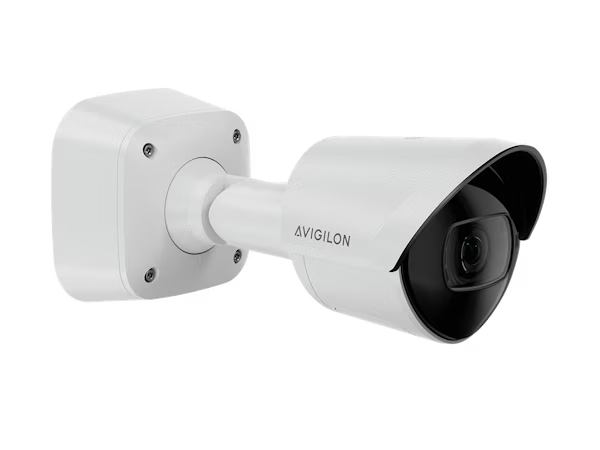
At Radio One the video surveillance solutions we offer from Avigilon help schools and districts detect and share critical information faster, so you can respond to incidents with the speed and knowledge you need to keep your students, faculty and administration safe and secure. Our versatile end-to-end camera and video management software allows you to increase your visibility and support a variety of optimal vantage points and improve detection.
The video analytics and AI built into our cameras and video management software allows to integrate your access control and two-way radios to your video management software, creating interoperable platforms that enable workflows that provide you with critical insights and real-time information to respond to events.
FAQ's
At Radio One/CSE Crosscom, we’ve gathered answers to the most frequently asked questions. If you don’t see what you’re looking for, feel free to reach out—our team is always here to help!
Q: How can mobile devices be used to support data center security?
- A:
Mobile devices can play a key role in improving responsiveness and visibility. Authorized personnel can receive real-time alerts, monitor camera feeds, and manage access remotely through secure apps. Mobile credentials can also replace traditional keycards, reducing the risk of lost or stolen badges. When properly secured, mobile devices enhance situational awareness and allow teams to respond quickly to incidents from anywhere.
Q: Are two-way radios a better solution than mobile devices in data centers?
- A:
Both tools have their place. Two-way radios provide instant, reliable communication without relying on cellular or Wi-Fi networks, making them ideal for critical operations and emergency situations. Mobile devices, on the other hand, offer broader functionality like alerts, analytics, and system control. Many data centers benefit from using both—radios for immediate communication and mobile devices for data-driven insights and coordination.
Q: How can we support better network and cybersecurity within our data center?
- A:
A strong cybersecurity posture starts with layered defenses. This includes firewalls, intrusion detection systems, network segmentation, and continuous monitoring. Physical and cyber systems should be integrated so that events like unauthorized access attempts can trigger both physical alerts and network safeguards. Regular audits, patch management, and employee training also play a critical role in reducing vulnerabilities.
Q: What key steps should our data center take to enhance safety and security?
- A:
Start with a comprehensive risk assessment to identify gaps. Implement layered security, including video surveillance, access control, and environmental monitoring. Standardize policies for access, incident response, and auditing. Integrate systems into a centralized platform for better visibility, and ensure staff are trained on both physical and cybersecurity protocols. Ongoing monitoring and regular updates are essential to staying ahead of evolving threats.
Q: What does access control look like in a data center environment?
- A:
Access control in data centers is highly granular and often multi-layered. It may include perimeter access, mantraps, biometric authentication (like fingerprint or iris scans), and role-based permissions that restrict access to specific racks or zones. Detailed logging and audit trails ensure accountability, while integration with other systems allows for automated alerts if unusual access patterns are detected.
Q: What is orchestration in a data center context?
- A:
Orchestration refers to the integration and centralized management of multiple systems—such as video surveillance, access control, environmental sensors, and network monitoring—into a single platform. This allows operators to automate workflows, correlate events across systems, and respond more efficiently to incidents, improving both security and operational efficiency.
Q: What is a data center security ecosystem?
- A:
A security ecosystem is a connected network of technologies that work together to provide comprehensive protection. In a data center, this includes physical security (cameras, access control), environmental monitoring (temperature, humidity, power), and cybersecurity tools. When integrated, these systems provide a unified view of operations and enable faster, more informed decision-making.
Q: How can we improve connectivity and network performance in our data center?
- A:
Improving connectivity starts with robust infrastructure—high-quality cabling, redundant network paths, and scalable switching equipment. Implementing proper network segmentation and load balancing helps optimize performance. Continuous monitoring tools can identify bottlenecks, while regular maintenance ensures systems operate at peak efficiency.
Q: What does all of this cost?
- A:
Costs can vary widely depending on the size of the facility, the level of security required, and the technologies implemented. While there is an upfront investment, many solutions are scalable and can be deployed in phases. More importantly, the cost of not investing—such as downtime, data breaches, or compliance failures—can be significantly higher. A tailored approach ensures you get the most value while addressing your specific risks and operational needs.
Let's talk solutions...
If you’re looking for reliable data center communication, productivity and safety solutions, Radio One/ CSE Crosscom has the latest voice, video, and data technology.
Contact us today and find the best solutions for your data center.